

Championing a Thriving Music Ecosystem
CU Denver Students and Faculty Attend Music Policy Forum 2026 Conference
Kristin Goosen, MS | College of Arts & Media Nov 23, 2026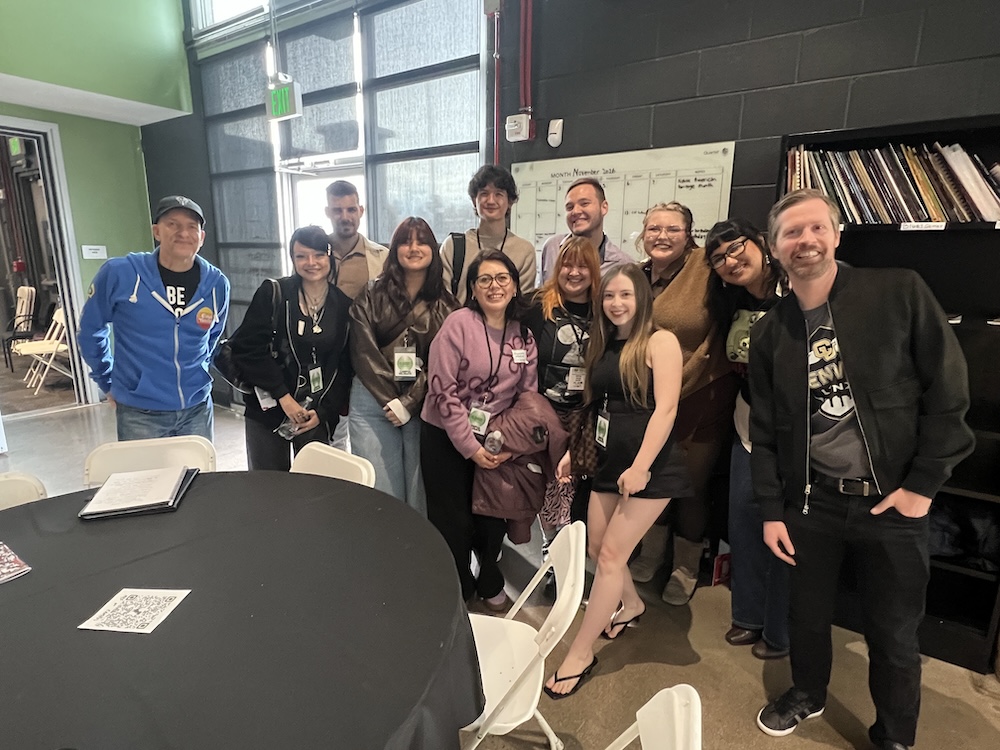 Arts and entertainment are cornerstones of economically thriving and vibrant communities. The Music Policy Forum (MPF) works as a conduit for musicians, music-related businesses and nonprofits, governments, and educational institutions to come together to build more resilient music ecosystems with broad societal benefits. The University of Colorado Denver sent twelve delegates to this year’s Music Policy Forum 2026 Conference held in Denver.
“Our involvement with the MPF provided a direct outlet for our students to be in the room and actively participate with professionals from all over the industry,” Evan Shelton, department chair of Music & Entertainment Industry Studies (MEIS) in the College of Arts & Media(CAM), said. “While our students learn so much in their classes, the opportunity to go out into the world and engage with the industry, and most importantly, the people in it, is by far the best way to learn.”
The Delegation
Ten of the CU Denver delegates came directly from the MEIS department and included MEIS Department Chair Evan Shelton, Music Business Program Director Storm Gloor, and students Alun Anderman, Sorcha Becker, Annalise Hansen, Zoey Mascarenas, Jackson O'Brien, Daniel Pinto Gonzalez, Jacqueline Stiefel, and Liliana Terrones.
Due to the cross-disciplinary nature of the conference, the College of Arts & Media invited two additional delegates from the School of Public Affairs (SPA), Dr. Alejandra Medina and Dee Dee Flynn. Medina is an assistant professor, and Flynn is SPA’s events & outreach senior professional as well as a student in the Master of Public Administration program.
“This experience highlighted the value of interdisciplinary scholarship across the SPA and CAM communities. Faculty and students from both units can benefit from engaging with experts beyond their primary fields,” Medina said.
“Let’s See Action”
The conference’s theme this year was, “Let’s See Action.” Organizers sought to showcase visionary thinkers, government in action, and strategic exploration of what can make “stronger music ecosystems in this uniquely complicated era.”
The intersection of music and policy was an intriguing premise to attendees like Becker, who is a current Music Business student. While Becker’s passion lies in music, her mom does prescription drug policy work.
“I've always had an interest in policy because of her. So, [MPF] really blended two important worlds for me, which I had never considered crossing,” Becker said.
She had expected to sit in a room listening to the presentations of people there to tell her about her field. What she didn’t expect was that she would be actively involved in collaborating to come up with solutions to the issues facing the industry using the connections and skills the attendees themselves had to offer.
“It made me realize how much everything connects to each other and how no one is dealing with issues alone. I think it forced me to leave behind preconceived notions about how competitive, aggressive, and predatory the industry is and see it as collaborative, kind, and helpful,” Becker said.
Flynn came to the conference with an inverse perspective to Becker: studying public affairs but with a personal passion for music.
“This forum highlighted the importance of collaboration across disciplines and the value of creating opportunities for our university communities to connect beyond their individual schools and departments,” Flynn said. “The result was a collaborative environment where we could explore the connections between music, policy, education, and community development. It was a great reminder that these fields are not separate worlds; they are interconnected, and each has an important role to play in building thriving creative communities.”
As a faculty member in SPA, Medina agreed that the cross-disciplinary nature of discussions was the most stand-out aspect of the conference.
“I was pleasantly surprised to learn that members of the music industry do consider public policy a relevant field and see benefits in collaborating with the public sector, academia, and nonprofit organizations,” Medina said.
She was also impressed with the student-centered programming, which gave the students the ability to gain insights and engage directly with industry professionals.
Becker had taken the opportunity to ask questions she said she might not have had by only reading course materials and attending lectures. She was able to connect what she’s been learning in the classroom and applied it to the real-life discussions facilitated by MPF, creating a more tangible throughline to her education and her future career.
“[The MPF Conference] could be beneficial for any student, whether in the Music Business program or in a policy program, because not only are you meeting people in careers that you may want to have or will work with postgrad, but you learn so much knowledge across a variety of topics, including law, venues, labels, and safety. It was almost a never-ending well of knowledge,” Becker said.
This type of experiential learning and industry connection is exactly what Shelton had hoped for from CU Denver’s involvement with MPF.
“I saw [the delegates] light up as they encountered how welcoming this particular community is to new people, which showed first-hand how collaboration is paramount to building a successful music network,” Shelton said.
The Takeaways
Delegates came out of the conference invigorated and energized, learning and growing in ways that were sometimes unexpected.
“Speaking with Evan [Shelton] and Storm [Gloor] from MEIS made me realize that we can collaborate to organize research discussions and events to highlight how public policies can be applied to the music industry,” Medina said. “Overall, the conference was a valuable reminder of the important role public policy plays in supporting vibrant and sustainable cultural ecosystems.”
Student attendees specifically were introduced to an environment where they were able to grow in their professional identities while engaging their industry with curiosity.
“Seeing them grow their confidence in this area was so cool,” Shelton said.
MPF opened the doors for these students to explore other areas of the music industry that they may not have known or considered as career paths before.
“Our ability in MEIS to show students how many diverse opportunities for music industry careers there are is essential, and these types of opportunities are the best way to help them plug into the community and their passions,” Shelton said.