

‘Homeland’ Exhibition Invites Himalayan-Rocky Mountain Exchange
Lain Singh Bangdel is considered the father of modern Nepali art and a pivotal figure in Nepal’s history.
Megan Briggs Pintel | College of Arts & Media Sep 12, 2025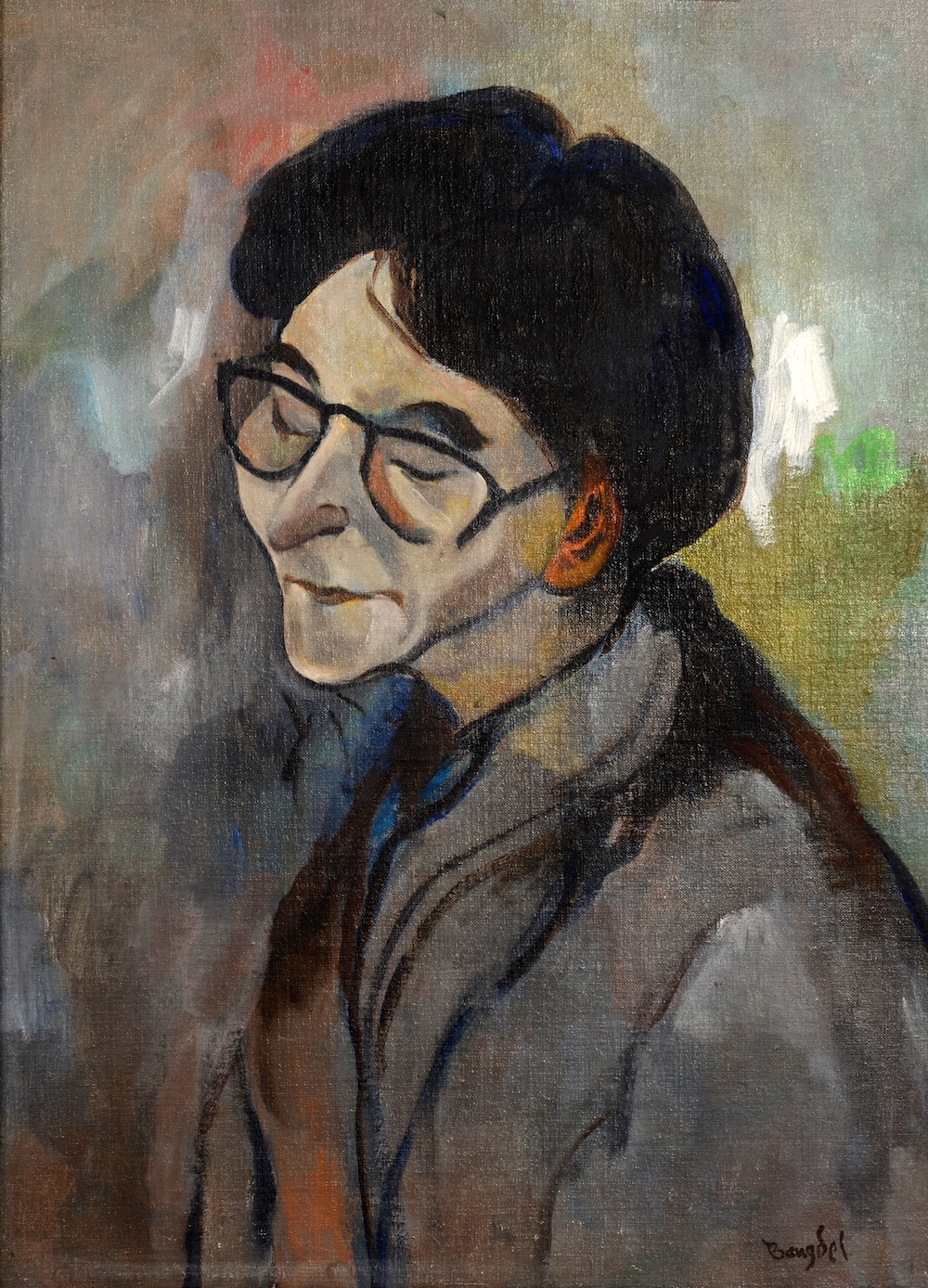
Homeland Exhibition
“Homeland” will be on display at the Emmanuel Art Gallery
Sept. 25 through Dec. 13, 2025
Learn more and plan your visit at emmanuelgallery.org
Opening Sept. 25, 2025, at the Emmanuel Art Gallery, “Homeland” invites viewers to reconsider what they know about Nepal through the work of Lain Singh Bangdel (1919–2002), the father of Nepali modern art and a pivotal figure in the nation’s cultural history. Featuring more than 40 paintings, it represents the largest exhibition of Bangdel’s art presented in the United States to date.
“Homeland” features several Nepali mountain landscapes, and the fact that they will be on display in Denver “creates a moving dialogue between Nepal’s Himalayas and Colorado’s Rockies, underscoring the universality of landscapes in shaping human connection,” says Bibhakar Shakya, PhD, Bangdel’s son-in-law and owner of the late artist’s collection.
In many ways Bangdel was a bridge between Nepal and the modern world. He visited Denver in the 1960s and was impressed by the Asian art featured in the Denver Art Museum. Shakya believes his father-in-law would be very happy to know his work was coming to Denver, a place that is home to a sizable population of Nepali people. According to the 2021 Colorado Lotus Project, 6,700 Nepali people call Colorado home.
Themes of the Exhibition
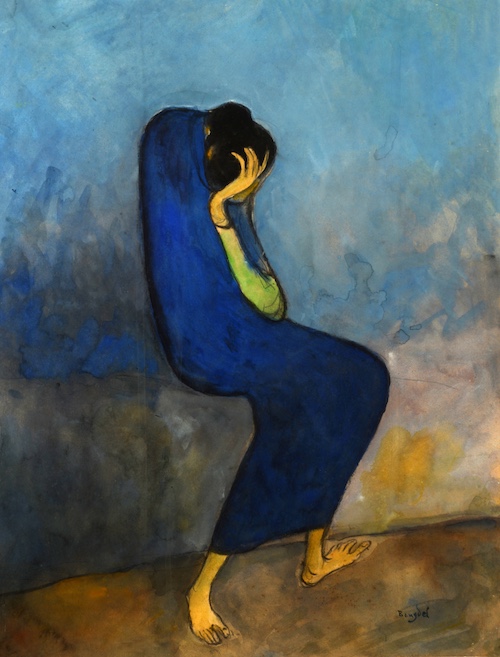
In addition to landscape, Bangdel utilized abstraction and was inspired by modernist artists like Pablo Picasso. Visitors to the exhibition will pick up on themes of social issues like economic inequalities, social injustice, and racial diversity in the Himalayan region. They will also see themes of maternity and belonging. CU Denver Associate Professor of Art History Yang Wang, PhD says Bangdel’s “Mother Nepal” painting, which features a thin female figure wrapped in blue and slouching, shows Bangel’s concern for his country and a deep-rooted regard for his heritage.
Wang says the portrayal of Tibetan people speaks to the ethnic diversity present in the region, a diversity that is often glossed over by a wide brush in western society. While Bangdel’s Nepali contemporaries largely avoided Tibetan subjects, Bangdel embraced them and treated them with care in his paintings while speaking to racial discrimination and caste dynamics prevalent at the time.
Bangdel’s History and Legacy
Bangdel was born to Nepali parents living and working in Darjeeling, India in 1919. He was educated under the British colonial system and, despite his family’s poverty, studied at Government College of Arts and Crafts in Kolkata and later traveled to France and the U.K. to continue his art education. While in Europe, Bangdel met Nepal’s King Mahendra, who asked him to repatriate and establish the modern art movement in Nepal.
The king’s request led to Bangdel’s career as an administrator and leader in Nepal. He served as the Chancellor of the Royal Nepal Academy for several years. His time there was contemporaneous to a period of major art trafficking, explains Wang. A self-taught art historian, Bangdel’s scholarly book, The Stolen Images of Nepal, and other published studies laid the foundation for heritage preservation efforts in that country.
Bangdel was a multifaceted artist and wrote literature in addition to painting. “Younger artists and scholars often tell me that his writings and paintings showed them it was possible to be fully Nepali and yet part of the modern world,” says Shakya.
The conversation around modernism in art is heavily western-centric, something Wang has personally tried to shift through her research on Chinese modernist art. And while art history is starting to recognize some of the larger countries and cultures like Japan, China, and Brazil, Nepal is still on the margins of this conversation.
Significance of Exhibition at CU Denver
Shakya’s late wife, Dina Bangdel, was a leading scholar of South Asian and Himalayan art. Wang, who studied with her at Ohio State University, reconnected with Shakya while planning a CU Denver study abroad trip to Nepal—an exchange that sparked the idea for the exhibition.
For Shakya, presenting Bangdel’s work is both deeply personal and a way to honor the legacies of his father-in-law and wife. He collaborated with senior artist Jeevan Rajopadhyay in Kathmandu and Richmond Conservation Studio in Virginia to restore and prepare the paintings, ensuring their preservation for future generations.
The Emmanuel Art Gallery has made a name for itself by featuring cutting-edge art and giving opportunities to rising artists, so Bangdel’s exhibition represents a slight departure from its typical offering. “I think it’s really interesting to bring the work of someone like Bangdel into a contemporary art space to show what groundbreaking looked like at a different time,” says Emmanuel Art Gallery Coordinator Andrew Palamara. “We’ve accepted modern styles of painting as being ‘capital A’ art, but when Bangdel was creating, it wasn’t the case,” he says.
Wang hopes visitors walk away from the exhibition with the understanding that “Nepal is more than just trekking in the mountains and yoga retreats. It’s a distinct culture with distinct history. It’s a nation that is changing and modernizing.” Wang says she is proud of CU Denver for hosting “Homeland” and moving the conversation around non-western modernist art forward.
Shakya hopes to fulfill Bangdel’s wish to inspire young artists through the exhibition. “To the artists of tomorrow, Bangdel’s life teaches perseverance, authenticity, and the courage to stay rooted while reaching for the world,” he says.