

By Design: A Look at CU Denver’s Digital Design Program
Hands-on design experiences empower students to shape inclusive, innovative futures.
Megan Briggs Pintel | College of Arts & Media Dec 8, 2025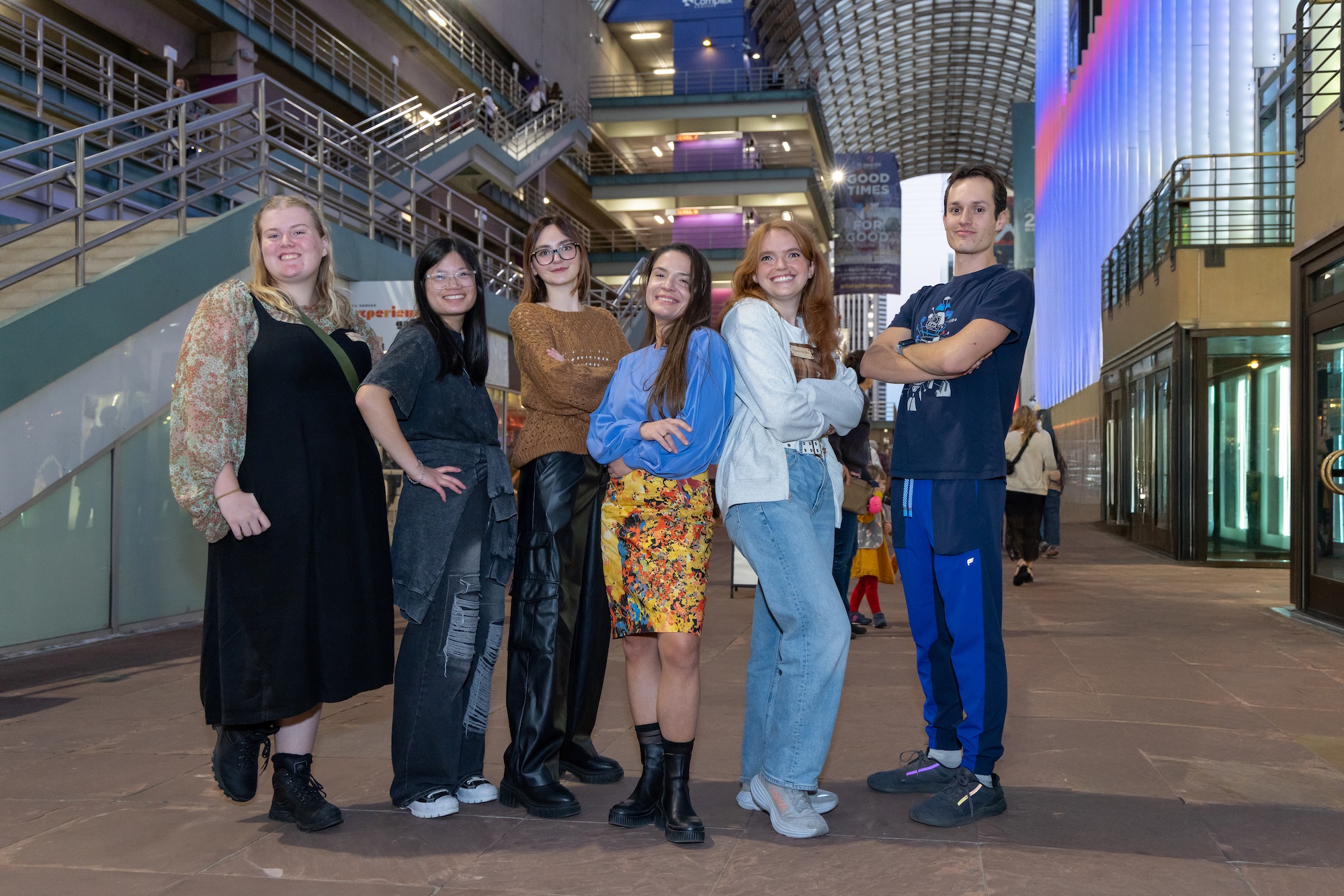
Dressing Outloud
On display at the CU Denver Experience Gallery through February 15, 2026
located in the Denver Performing Arts Complex
Costumes by Meghan Anderson Doyle and Kevin Copenhaver
Digital Interactive Prototypes
Authors: Elizabeth Hager, Mean Zuiderveen, Carolyn Kuehler, Sophia Counter,
Montse Garduno, Juno Cooper
"Trash it Yourself"
Authors: Gianni Inzitari, Sage Parker, Madeline Marvan
"Personality Quiz"
Authors: Carolina Munoz, Marin Perkins, Isabella Andrus, Piper Smith,
Michaela Hansen, Emma DeMuth
"Scavenger Hunt"
Authors: Charlie Greene, Edward Oliver, Jackson Dalton, Molly Larson,
Nathan Potter
Good design does things like solving a problem for people, elevating an experience, or making people feel included. At CU Denver, the curriculum for digital design is heavily experiential and gives aspiring designers a broad overview of the industry. It also gives them ample experience working with clients and the opportunity to display their work in public settings.
“Digital designers are creative problem solvers with technical expertise across platforms and media,” says Assistant Professor Darija Medic.
Medic’s Interactive Media class was recently tasked with collaborating with the CU Denver Experience Gallery on an exhibition titled “Dressing Outloud”. The exhibition features costumes created by Denver Performing Arts Center costume designers Meghan Anderson Doyle and Kevin Copenhaver. Working in teams, the class designed and developed four digital interactive prototypes (or experiences) that gave visitors to the gallery multiple ways to engage with the exhibition. Visitors are met with the options of a scavenger hunt, a personality quiz that determines which costume suits them best, a digital guidebook to the costumes on display providing context for the fabrics chosen and the techniques utilized in costume creation, and an app that accompanies a Krampus costume in the style of the popular game Cooking Mama. Throughout the duration of the exhibition, visitors also have the option to complete surveys about their experiences with the interactive prototypes, giving students valuable feedback on their designs.
CU Denver Digital Design Emphasizes Experiential Learning
Experiential learning and working with clients are intentional elements of CU Denver’s curriculum. In the student’s last year of classes for the degree, they take Design Studio III, currently taught by Lynn Mandziuk. The class is tasked with solving a problem for a nonprofit organization. This may include logo design, website design, collateral design, or even app design. Nonprofits in the Denver community are helped through the project, while students gain valuable experience and get to include the work in their portfolios. During the class a few years ago, a group of students developed concepts for an app for Dinosaur Ridge in Morrison. Dinosaur Ridge is home to one of the world’s largest collections of dinosaur fossil tracks (footprints). The students were tasked with the challenge of creating a way to explain complex paleontology concepts in an engaging way. The students came up with the idea of an app incorporating AR and VR elements that gamified a visitor’s experience. Using AR, visitors can see how a dinosaur would have moved through the land they are currently standing on at Dinosaur Ridge.
For current student Carolina Munoz, a class that stands out is Design Studio I, which focuses on developing foundational skills, like how to create brand identity guidelines. While the projects were challenging and at times stressful, Munoz says the elements she was able to add to her portfolio from that class “show I’m versatile and can adapt” based on a client’s needs or to work within branding guidelines.
Experiential and client-facing projects give CU Denver students an edge post-graduation as they are job hunting. “Clients and employers will always be more interested in designers who show work that has been approved and utilized by someone because that means the design has been vetted by another party as successful in fulfilling their needs,” Medic explains.
Teaching the Higher-Level Concepts of Design
As interactive design changes due to technological advances like the implementation of AI, considerations of inclusion and practical aspects of accessibility are critical for universal access. CU Denver’s Digital Design program may be essential to that adaptation because of the university’s genuinely diverse student body, which is a rare find in design schools and the design industry overall. “We cannot make design more equitable if the field is homogenous and gatekept by privilege,” Medic says. Equipping students with knowledge about the elements of design like methods and rules of visual / interaction / motion / brand design will help them address new challenges that designers are starting to face—developing informed and persuasive arguments around design solutions. The tools a designer uses may be changing, but the concepts that make good designs good always endure.
By collaborating with the CU Denver Experience Gallery, the students in Medic’s Interactive Media class grappled with some of these higher-level concepts, such as how digital interactions live within physical space. The project also required them to do extensive user experience research. Projects such as this one nurture storytelling within UI/UX design, which is a valuable skill that is not often emphasized in other digital design programs.
These projects—experiential and client-focused—constitute the backbone of the digital design program at CU Denver and ensure students graduate with a depth of knowledge that is informed by theory but also versatile, practical, and strategic.